How Environment Shapes Identity
Ever-Becoming: The Art of Reinvention — with Sanu
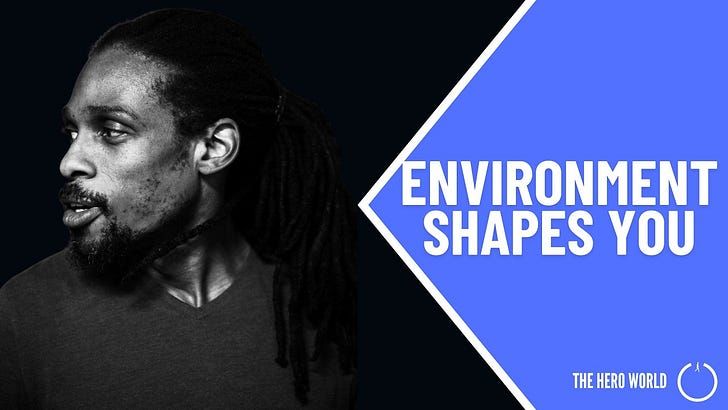
There are moments in life when everything familiar dissolves — when the rules that once defined you stop making sense. It’s in that emptiness, that vast unknown, that you’re invited to reinvent yourself.
That’s where Sanu lives — in the constant process of ever-becoming.
Born and raised in Watts, California, Sanu grew up surrounded by contradictions: gangs and gumbo, violence and poetry, chaos and community. Yet even in the middle of that world, he developed a deep curiosity about architecture, human behavior, and spirituality. His story is one of continuous reinvention — moving from trouble to transformation, from the streets to sacred texts.
In our conversation, Sanu spoke about how environment breeds behavior, how culture can both shape and blind us, and how real power comes from defining the world on your own terms — not from the labels imposed on you.
“Comfort breeds weakness,” he said.
“It’ll have you missing out on opportunities to become a better version of yourself.”
He sees resistance not as punishment but as proof that growth is happening — the same way a seed has to push through dirt to reach light. Every moment of pressure, every unknown chapter, is part of the creative process.
“Life is about ever becoming more and more of yourself.
And when you stop doing that, you kind of stop living.”
Sanu’s philosophy is rooted in timeless wisdom:
that happiness is not the reward at the end of achievement but the fuel that moves you toward it;
that love is the ability to give without expecting anything in return;
and that every human being, no matter their faith, race, or story, ultimately wants the same things — warmth, connection, peace.
At 48, he says he’s finally comfortable in his skin. Not because life got easier, but because he learned to flow with it. To help instead of hide. To create instead of complain.
“Anytime I’m sad, I go find somebody to help.
Anytime I’m depressed, I go create something.”
This conversation reminded me why I started The Hero Project in the first place — to show that the hero’s journey isn’t about slaying dragons. It’s about learning to build again and again, even after life tears your plans apart.
To become, over and over, who you truly are.
There are moments in life when everything familiar dissolves — when the rules that once defined you stop making sense. It’s in that emptiness, that vast unknown, that you’re invited to reinvent yourself.
That’s where Sanu lives — in the constant process of ever-becoming.
Born and raised in Watts, California, Sanu grew up surrounded by contradictions: gangs and gumbo, violence and poetry, chaos and community. Yet even in the middle of that world, he developed a deep curiosity about architecture, human behavior, and spirituality. His story is one of continuous reinvention — moving from trouble to transformation, from the streets to sacred texts.
In our conversation, Sanu spoke about how environment breeds behavior, how culture can both shape and blind us, and how real power comes from defining the world on your own terms — not from the labels imposed on you.
“Comfort breeds weakness,” he said.
“It’ll have you missing out on opportunities to become a better version of yourself.”
He sees resistance not as punishment but as proof that growth is happening — the same way a seed has to push through dirt to reach light. Every moment of pressure, every unknown chapter, is part of the creative process.
“Life is about ever becoming more and more of yourself.
And when you stop doing that, you kind of stop living.”
Sanu’s philosophy is rooted in timeless wisdom:
that happiness is not the reward at the end of achievement but the fuel that moves you toward it;
that love is the ability to give without expecting anything in return;
and that every human being, no matter their faith, race, or story, ultimately wants the same things — warmth, connection, peace.
At 48, he says he’s finally comfortable in his skin. Not because life got easier, but because he learned to flow with it. To help instead of hide. To create instead of complain.
“Anytime I’m sad, I go find somebody to help.
Anytime I’m depressed, I go create something.”
This conversation reminded me why I started The Hero Project in the first place — to show that the hero’s journey isn’t about slaying dragons. It’s about learning to build again and again, even after life tears your plans apart.
To become, over and over, who you truly are.