Dark Night of the Soul


(Reading time 12min)
When I lived in Australia, one of my best friends was (and still is) Geraldo, a Brazilian guy. We often went to the beach to walk, eat Açai at sunset or in the water to do body surfing (Geraldo is a surfer).

What is Body Surfing?
Body surfing stands as one of the oldest surfing traditions, representing the epitome of pure surfing. Without a board or bodyboard, it's solely you, your body, and the wave, as you glide effortlessly upon it. It's an extraordinary sensation, as if you're seamlessly integrated into the element, embraced and carried like a fluid blanket.
Geraldo advises me, 'Hold your breath to conserve air and stay buoyant.' Just as he says this, a wave approximately a meter high approaches, lifting me up as I extend my arm and straighten my legs, essentially becoming a human surfboard.
‘WOAAAAAA!’ I exclaim as the exhilarating ride comes to an end, leaving me almost at the shore. ‘Incredible!’ I remark to Geraldo, who joins me shortly after finishing his own wave.
That was awesome.
We're at Freshwater, a beach located in the Northern Beaches, north of Sydney. Australia.

We have lunch in the one-bedroom apartment Geraldo lives in, two blocks away from the beach; a residential complex where the building is practically swallowed up by Australian subtropical vegetation and the Cuckatoos dominate the area without challenge, occasionally joined by bursts of vibrant and energetically animated parrots.


In the afternoon, we take a stroll, ascending the rocky cliffs of the coastline with various shades of blue below us.
"I'm going through a rough patch, brother" I confide once we've settled down to catch our breath, slipping off our shoes. The coarse rocks tickle the soles of my feet.
A gentle breeze rustles the bushes ahead, carrying distant beach chatter.
"I get it, every hero has their journey," he says.
"What do you mean?"
"The hero's journey. Joseph Campbell."
"I'm not familiar, tell me more.."
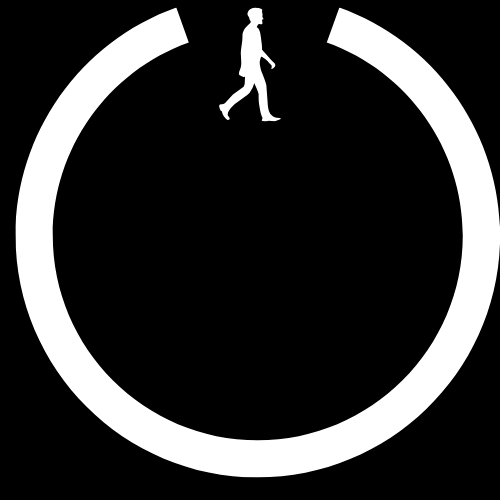
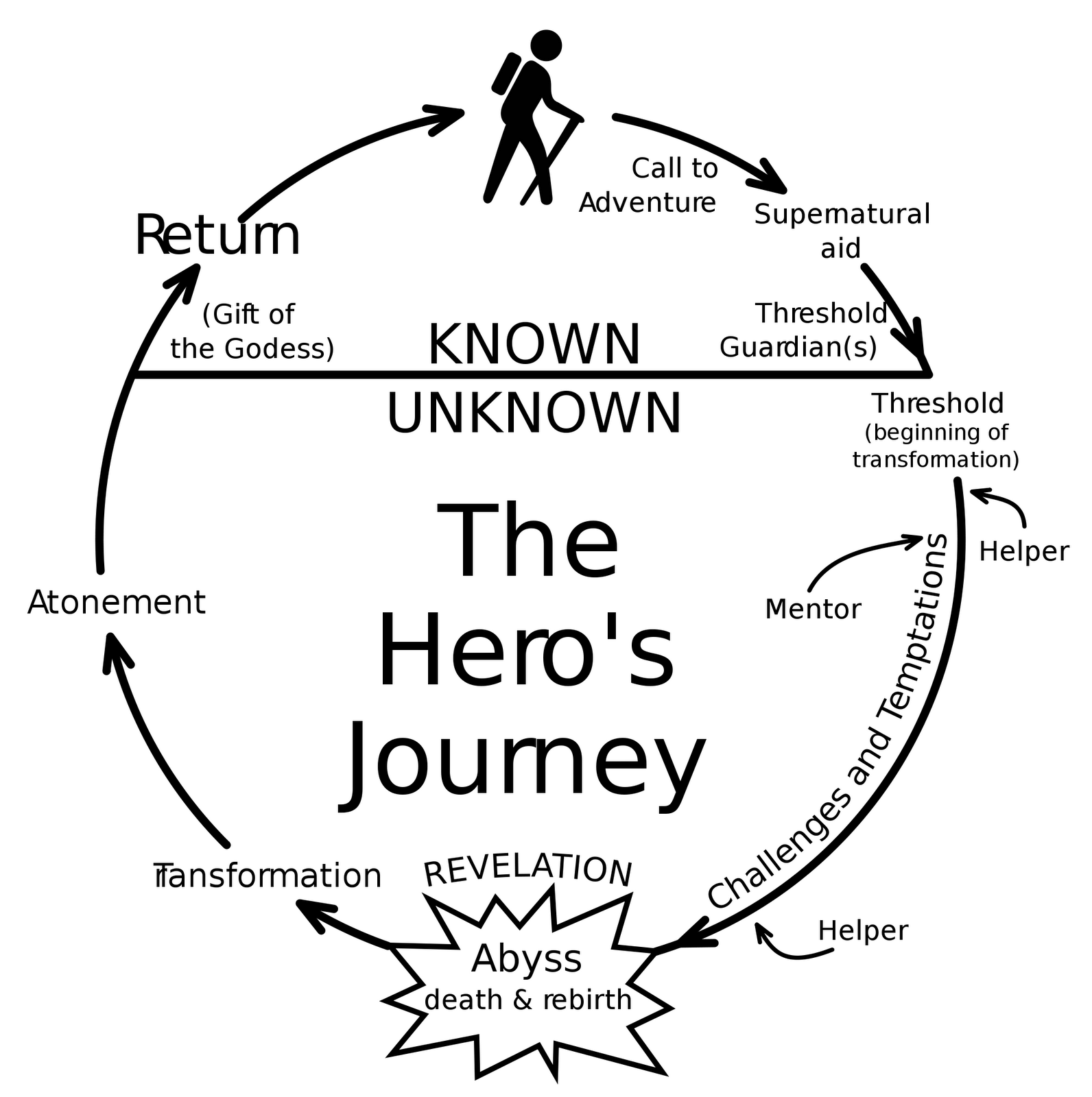
During my studies at Oxford (Geraldo holds a master's degree in English literature from Oxford), I stumbled upon Joseph Campbell, and it was a game-changer. Essentially, this scholar spent years delving into the myths of various cultures worldwide, culminating in his book "The Hero with a Thousand Faces," wherein he introduces the concept of the "monomyth" or "Hero's Journey": the hero embarks and concludes their journey in the familiar, ordinary world, but the crux of their adventure unfolds in the unfamiliar, extraordinary realm. And throughout this odyssey, pivotal events unfold.
"Like what?" I ask intrigued.
"For example, the event that shakes the Hero's world, and “wakes him up", the trigger that leads the Hero to start his journey, which Campbell calls "Call to Adventure". And the "departure" when the hero indeed, crosses the limit of the Ordinary/Known world to venture into the Unknown world.
"And what would this Unknown world be? Is it real?" I ask.
"It can be a metaphor. Think about something that happens in your life now, that completely shakes it up. And it makes you ask important, deep questions.."
"Go on.." I reply.
"You can decide to turn around and give it no weight or you can decide to start the journey, which will lead you to find the answers you are looking for, but.."
"BUT?!" I ask impatiently.
"What you find may not be what you want, and when you come back, you will not be the same person.."
It's been 8 years since that conversation, which I've never forgotten. I no longer live in Australia, and neither does Geraldo.
We're still friends, divided by an ocean.
Over the years, the fascination with Joseph Campbell has steadily grown. Through my studies and readings, I've delved into his work and believe I've uncovered a key to interpreting, at least on an archetypal level, the profound journey we call life.
It's akin to having a clear roadmap, beautifully delineating the steps of our experiences, past and present, guiding us toward our destination of "coming home."
Ultimately, the Hero's Journey mirrors life itself.
Recently, I stumbled upon a short book that delves into this concept. Its arrival in my life was serendipitous, almost paradoxical. I highly recommend giving it a read.
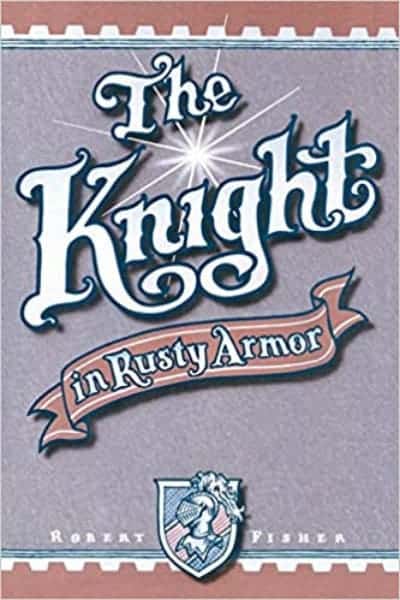
We are the warrior in focus here. The hero who has become inseparable from his armor, donning it round the clock.
His wife struggles to recall the contours of his face, while his son scarcely recognizes him.
Disagreements arise, fueling misunderstandings between them.
"But I do it for you," laments the Knight.
"What things do you do for us?" reproaches the wife.
"Kill dragons, free imprisoned damsels, defeat enemies. How do you think we can afford this castle otherwise?"
The days go by. The Knight, who has not taken off his armor for months, sees his relationship with his wife and son deteriorate more and more.
"If you don't take your armor off, I'm leaving, and I'm taking Christopher (the son) with me," his wife, Juliet, tells him one day, giving him an ultimatum.
"I don't want to lose my family, I love them too much," thinks the Knight. "Okay, I'll take it off," he says.
But the armor, pulling the shiny helmet, does not come off. They try in two, then in three, helped by Christopher. Nothing. Exhausted, the Knight thinks "I'll go to the kingdom's Blacksmith, he can surely help me"
But not even the Blacksmith can help him. The armor has become a second skin.
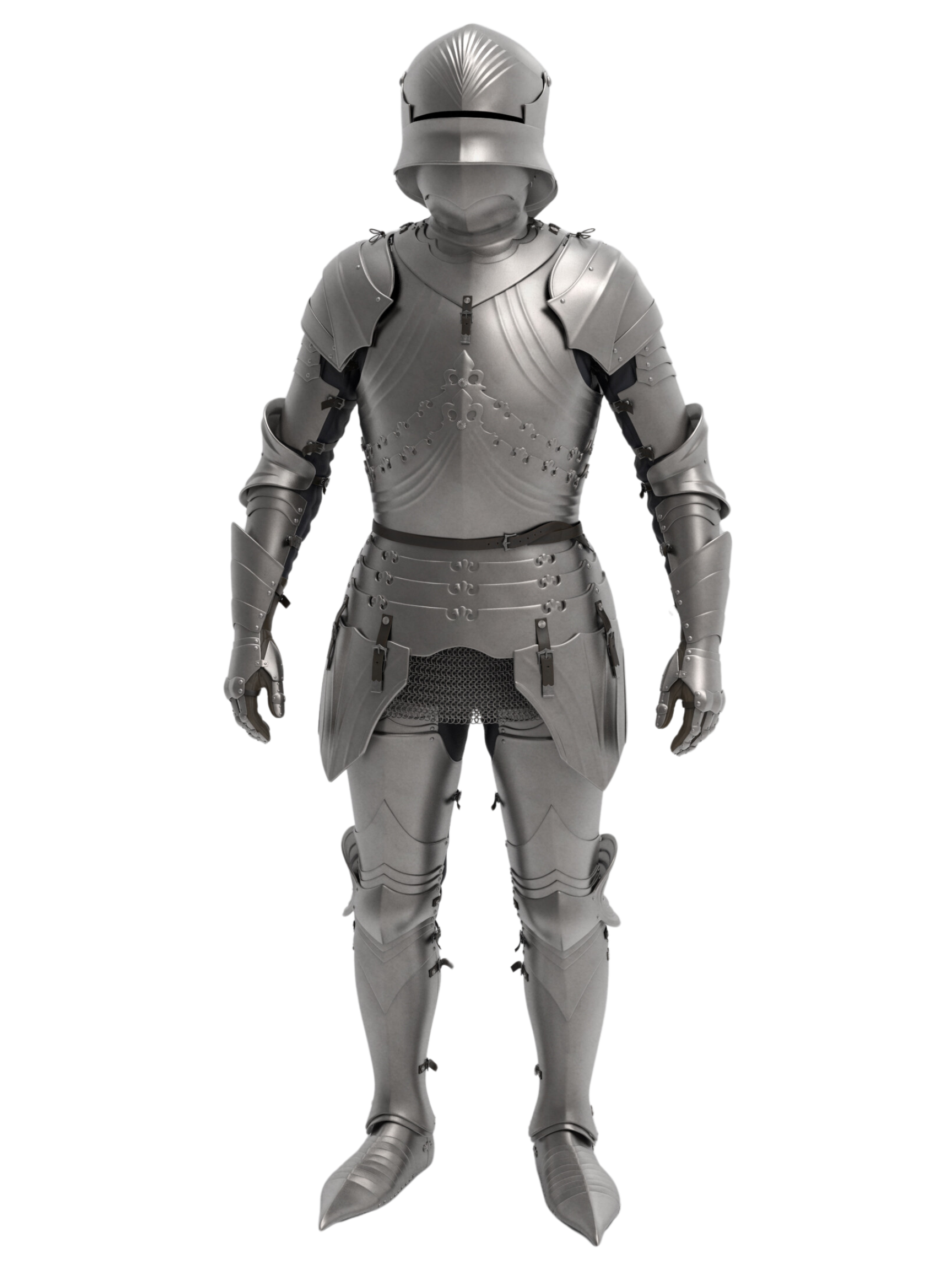
So he sets off in search of someone who can help him, leaving his family behind, for who knows how long.
"Merlin. He can help you" says the court Jester.
"How can I find him?" asks the Knight.
"He lives in the forest. That's where you'll find him"
"But the forest is huge. I can spend my whole life looking for him in there" the Knight complains.
"When the disciple is ready, the master appears" the Jester replies.
Anyway, I'm not going to spoil it (I recommend you read it), but what happens to the Knight is what happens to us, in our daily lives. We wear masks, to hide, cover certain characteristics of ours, to adapt and make ourselves accepted by the group we want to belong to. The employer who needs to see us in a good light. The partner to whom we must appear perfect, without weaknesses or gaps. And the more time passes, the more this mask becomes part of us until then, who we really are, we forget.
Frequently, especially in my professional life, I've dedicated my entire being and talents to the roles I've held. I poured in time, attention, and empathy. Yet, recently, my body, my essence, sent me unmistakable signals that I had to heed: "Stop. This isn't your path. You're depleting your energy."
For a brief stint, I worked at a nightclub in Miami. Nightlife isn't my scene, I’m not a night owl, but I assumed the role nonetheless. Then, one day, as I prepared for my shift, a tidal wave of emotions engulfed me—a panic attack I couldn't contain. Tears streamed down uncontrollably.
"What's wrong?" my girlfriend asks me.
"I can't.. I can't" I tell her.
"Can't do what?" she asks me.
"This. I am not this. I can't keep pretending to be who I'm not" I tell her.
I cried and cried, and my heart was beating hard and my whole body was shaking. It was talking to me. Only I didn't want to listen to it.
How do you "feel" this voice?
The Knight, when he ventures into the forest, is lost. He has no points of reference, he has no secure base. He wanders blindly. For months. Then, finally, he meets Merlin:
"I found you, finally. I've been lost for months" he says.
"You have always been lost" Merlin replies.
"I didn't come here to be offended" the Knight replies.
"Maybe you have always interpreted the truth as an insult" says Merlin.
The weary Knight, devoid of energy and identity, finds himself alone and disoriented in an unfamiliar realm, confronted by the enigmatic Wizard who presents uncomfortable truths.
"I'll linger only until I shed this armor," he declares.
"You can't gain wisdom by fleeing" Merlin counters. "You must learn to pause. Once you master this, you'll no longer feel compelled to rush in every direction."
Under Merlin's care, the exhausted Knight, unable to resume his journey, is guided to the Castle of Silence atop a treacherous mountain.
"Leave your sword here; it serves no purpose in this battle," Merlin advises.
Inside the castle, absolute silence reigns. The Knight, accustomed to perpetual action—rescuing maidens, slaying dragons—struggles with the unfamiliar tranquility as he traverses the castle, seeking an exit to continue his quest on the other side.
"What is this?" he thinks.
And the more he thinks, the more he is in silence, the more things start to come out. Without the outside noises, without Kings to give him directions or some distant kingdom where to go to free someone, he connects to himself.
How many times do we really stop to feel what's happening inside us? How many times do we ignore everyone, everyone, to listen only to what our heart says?
"I guess I've always been afraid of being alone" the Knight thinks.
And he thinks that he has always been busy "thinking" about what he had to do, his next adventures, who to take care of tomorrow.
A door opens.
A smaller room.
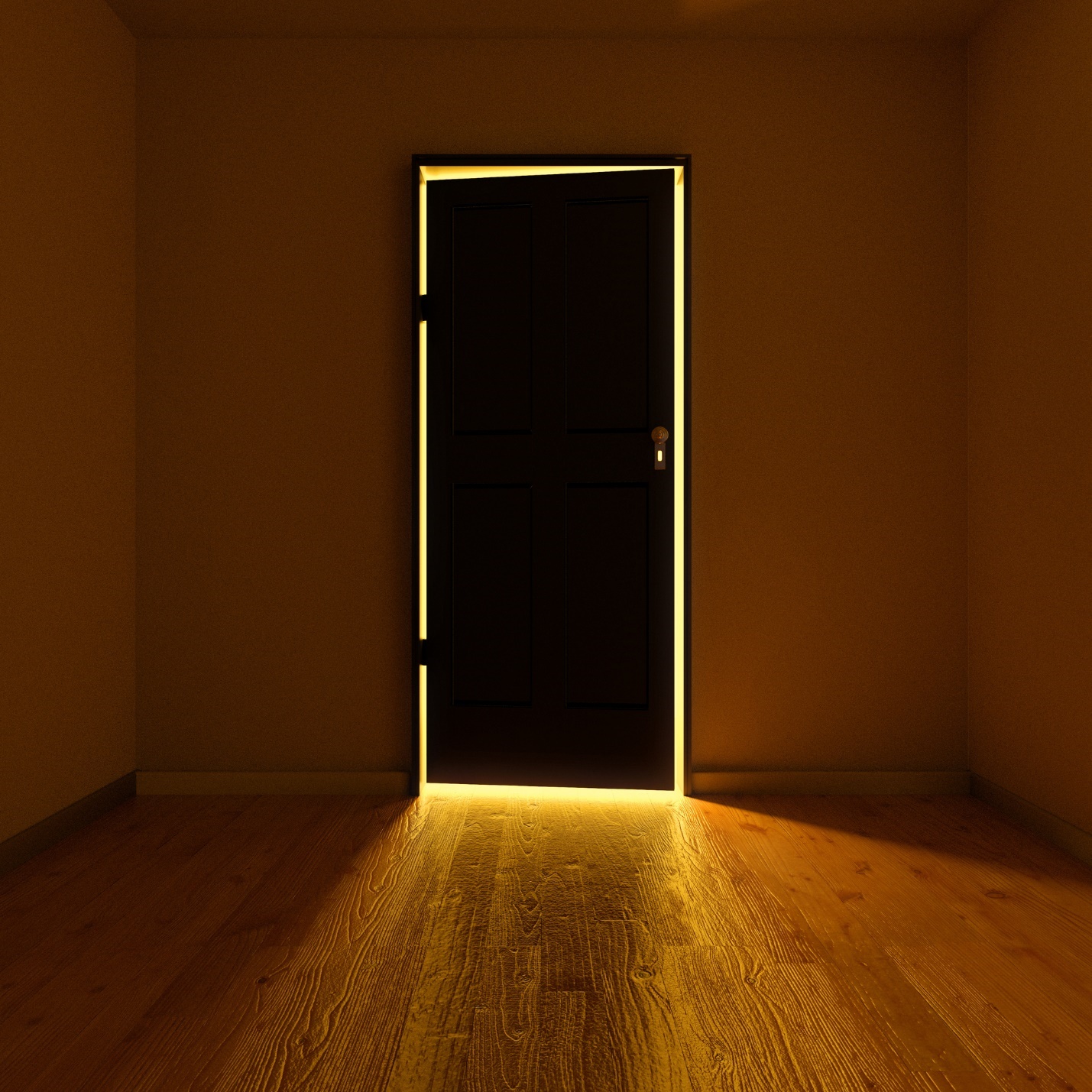
He contemplates Juliet's experience, imagining her struggle to share life with a man always fixated on the future, never fully present, and his son, who remains unaware of his true essence. "Perhaps they felt the same as I do now, in the silence of this tomb," he reflects.
Tears stream down his face uncontrollably, his sorrow deepening with each passing moment. Days blur into nights as he mourns, the weight of his pain and isolation chipping away at his hardened exterior, allowing vulnerability to seep through. With each tear shed, the armor begins to corrode, revealing glimpses of what lies beneath.
No more spoilers.
You likely have a sense of where the narrative is headed. The journey of awakening is a tumultuous one, marked by pain and uncertainty, yet crucial for shedding the protective armor and embracing our true selves
I am in the process.
These episodes I've been going through, the panic attacks, the emotional roller coasters, and the urge to ditch these masks, they're all signs telling me to drop my guard if I wanna keep moving forward.
I get it, I'll still have to navigate through that silent castle, but only when I tune into the now (Merlin's all like, "There's some real truth in the present moment if you just shut up and listen") and hear my true voice, then I know I'm on the right track.
The Hero's Journey isn’t what we expect at the start, and usually, when the Hero comes back, he doesn’t own a pile of gold or fancy treasures. He comes back empty-handed. But what he does bring is a whole new perspective, wisdom to share with the community.

A hug
M