Go for a Walk

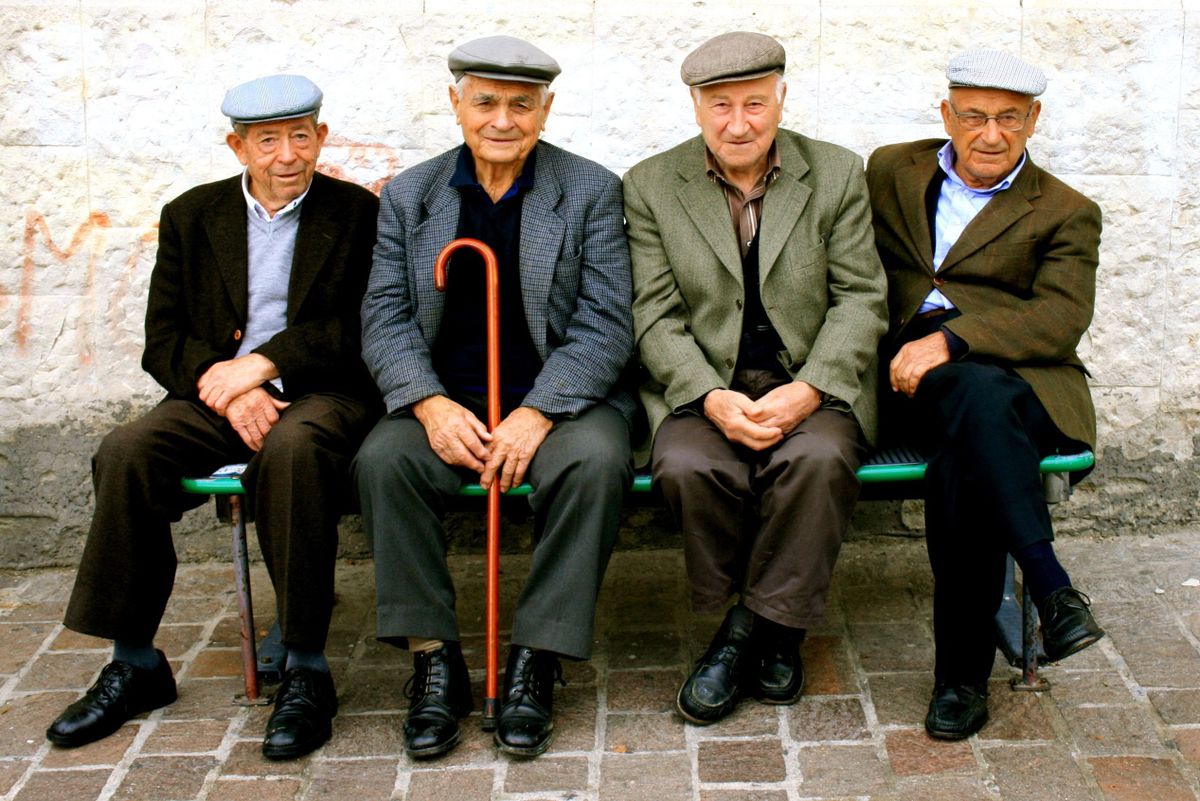
"In Italy, there are elderly people everywhere.
You see them everywhere, every day.
On the sidewalks, sitting on benches, in line at the supermarket, at the bar.
They are a pillar, and not even a very invisible one, of Italian reality.
And well, even though they are our grandparents, or neighbors, or friends’ grandparents, even though they are a flesh-and-blood connection to an era and a mindset that no longer exist, despite their care and their picturesque stories, despite their (not always) chivalry and old-fashioned attitudes, old people can also be a real pain in the ass.
In the car in front of you at the traffic light that won’t move, in the evening when they shout at you not to make noise, in private clubs where they want to maintain the 'status quo,' in politics with outdated ideas, at the post office counting their money one by one, taking five minutes to do so.
For me, having grown up in Italy, all of this was normal until I moved abroad. To the United States, where I live now. Here, you don't see elderly people much. They put them in nursing homes. Luxury ones, with all the comforts and amenities, but still confined 'outside' of everyday life. The life we live daily, that is.
It's as if a piece of society is missing, following the previous logic.
I know because I worked in one of these places for almost two years, here in South Florida. A place that looks like an 18th-century French palace. A nursing home for the privileged.

Over the years, observing this part of the population indirectly, there was always one constant that I used to dismiss, a characteristic of their way of doing things that always seemed futile to me, a waste of time.
Walking.
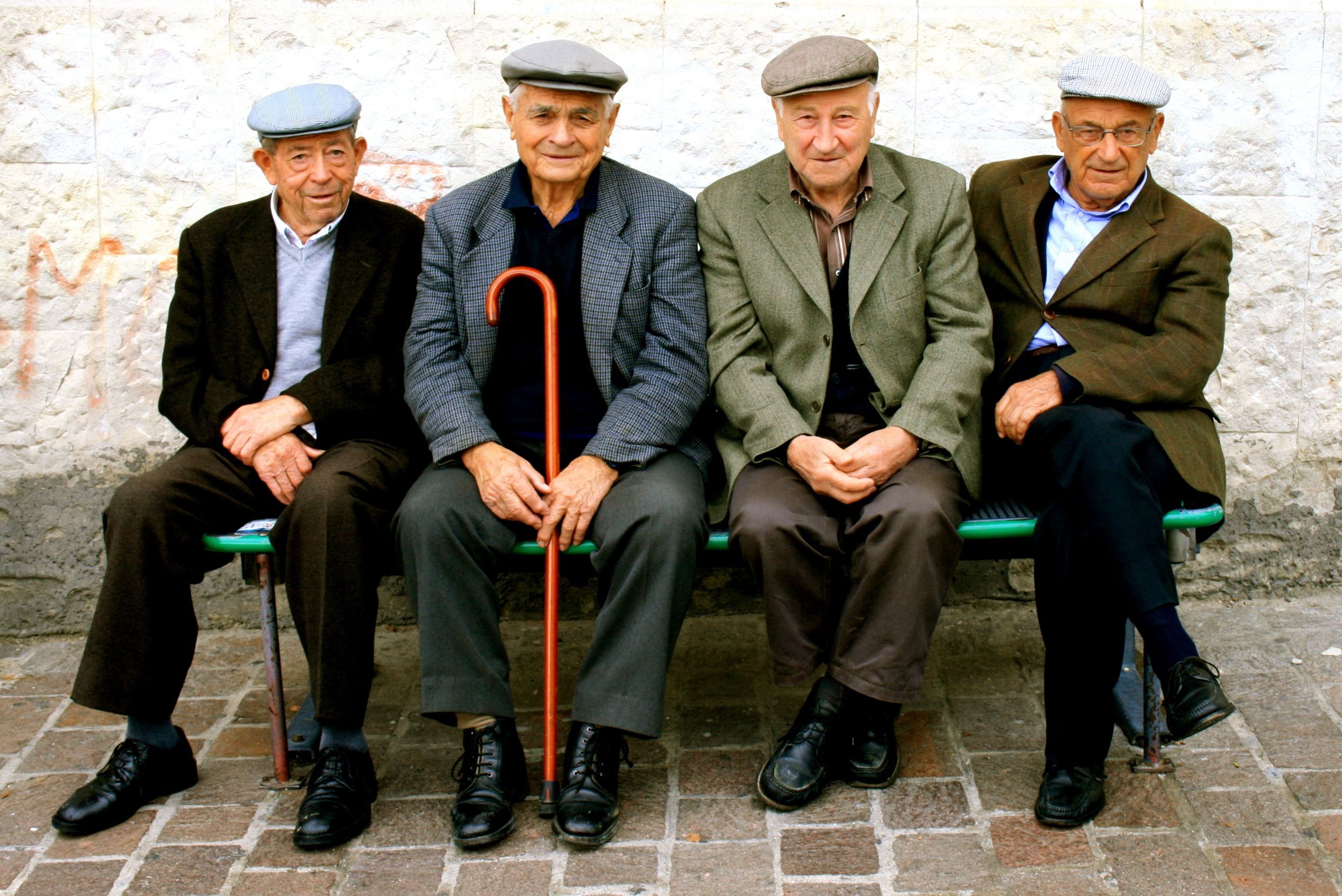
Especially in Italy, especially in the outskirts, in the countryside where I grew up, the 'old folks' walk a lot.
It's part of their daily routine. You always see them, especially in summer, in the evenings when the heat subsides, after dinner, coming out of the house and walking in groups. They mostly chat, but they do it while moving.
I always thought, 'Why the hell do they do it? If you want to chat, you can do it sitting on the couch. If you need to get from point A to point B, you can do it faster by car/motorbike/bicycle.'
I held on to this belief until recently.
At nearly forty years old, without any specific plan or intention to explore that particular place, I suddenly found myself on a Swiss Air flight from Miami to Milan, and then Milan to Lugano, in Switzerland.
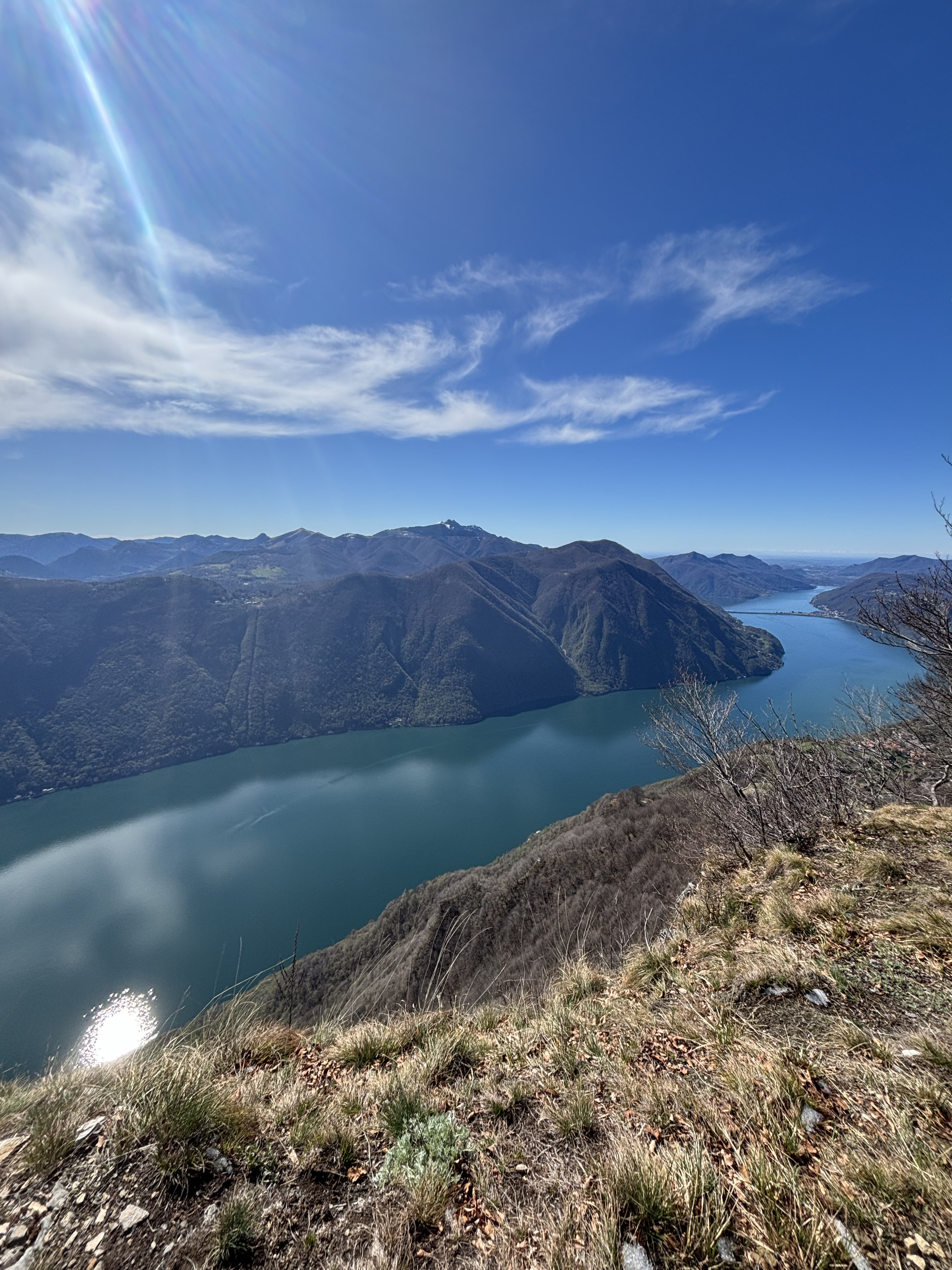
From the chaos (see previous article) of the big city, to the total silence of the lake at the end of the long northern winter.
And there, without any Wi-Fi connection, no cell phone, no television to connect me with Netflix or Amazon Prime or Hulu or HBO, I started walking every day.
Without a phone, without a podcast, without music.
I walked to town, strolling along the sidewalks by the lake, watching construction workers unloading building materials by the roadside, or a guy, in the most orderly and calculated manner, taking off his clothes, folding them perfectly into a spotless bag beside the ladder, where every morning at 7, in the freezing cold before sunrise, he would take a dip in the water. Or the countless runners dressed in Lycra and layers of technical clothing passing by during their pre-office morning run, or the ducks entering and leaving the water, shaking off droplets from their waterproof feathers that I saw disperse into the perfectly manicured grass by the dock.
In short, during my walks, I was able to immerse myself completely in the environment around me, and I have to say it was an enlightening experience because if you observe, there's an infinite number of things happening around us every single second, if only we stop, disconnect, and reconnect.
( or as Timothy Leary would say turn on, tune in, drop out ).
And not only that, but also real hikes in the mountains, on those steep slopes, with breathtaking views.
In the distance, you could see cars climbing these steep roads, disappearing and then reappearing on the same road on the other side, a trail in the green of the mountain. And then beautiful birds of prey, hovering in the air with wings spread, letting themselves be carried by the updrafts like enormous invisible elevators. And the clouds, drawing abstract patterns in the sky that at times took on concrete and sometimes even funny shapes. And flocks of goats and mountain springs filling these rock basins where you could (as I did) immerse your entire head.
So, what have I learned from all this walking?
- Contrary to what one might think (or what I used to think), walking is not boring at all. If you can truly connect and observe what’s happening around you, you’ll be surprised. Everything is constantly changing, and if you walk regularly, even taking the same route, each time will be a different experience because there are countless variables that make the walk unique. Different elements in the surrounding environment, different plays of light or clouds in the sky, or even if everything were exactly IDENTICAL (impossible), you are the other infinite variable because every day that passes, you are not the same person, and therefore you approach every situation that presents itself differently.
- Trust me. You don’t need to constantly entertain your mind (by listening to music, podcasts, audiobooks, or talking to someone else). Leave space for silence to enter the depths of your mind while you’re in motion. Beyond the landscape that inspires and influences you (see point 1), you’ll be surprised to see how things come out of nowhere from your mind, and images, thoughts, ideas, words, and songs start buzzing inside you. You are the result of everything that has happened to you in life up to this exact moment, and everything that has happened to you, you carry inside. If you leave some empty space, you have AMPLE material to work with just by being alone with yourself.
- Going back to the elderly (who know a thing or two), I was often told, 'sleep on it' or 'don’t think about it' when I had to make big decisions and didn’t know what to choose. These aren’t just random phrases; they actually have a very specific meaning. Taking your mind off a problem, or a creative block, by 'taking it' elsewhere not only helps lighten the load but also gives time and space for the subconscious to reorganize and re-categorize things. Observing the surrounding environment, letting your mind wander, and moving your body are meditative activities that help relax and soothe your nerves. When you give your mind the chance to 'disconnect,' you activate unconscious and unaware mechanisms that continue to work and generate ideas and solutions without your control. It’s magic.
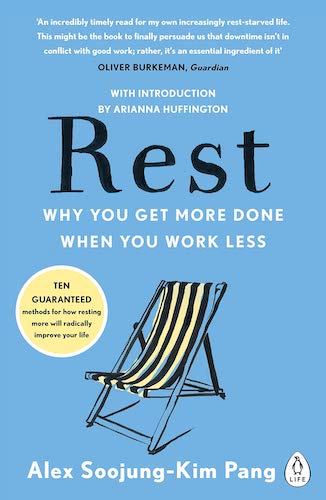
I recommend reading this book:
Why?
Following the thread of my previous article, in which I praised the art of silence, in this book, the author presents a theory that goes against the grain, at least in mainstream American lifestyle, suggesting that we are more productive, in terms of work efficiency or creative projects, when we work less. When attention is fully concentrated on an activity for a period of three, four, or at most five hours a day, and the rest of the time is spent on activities that completely disconnect the rational part of our mind and allow space for the unconscious part to work, plan, come up with original ideas, and create.
Meditating, sleeping, exercising, walking.
Paradoxically, the more time you allow your mind to wander freely, the more ideas and solutions you’ll generate.
Of course, this approach can be applied to those professions that base their success on creativity, ingenuity, and finding solutions—professions that often yield greater financial returns as well.
In short, the takeaway is: keep walking. And if you don’t, start.
A hug. M