Samurai, Jung & Near Death Experience

A sense of Calm trust in fate.
A quiet Submission to the inevitable.
A stoic composure in sight of danger and calamity.
A friendliness with death.
Since I was a child, I’ve been fascinated by Eastern philosophies—Buddhism, Zen, and especially the samurai.
Yes, the samurai. Hagakure. Bushido. A code of honor. A way of life.
"The way of the samurai is found in death."
I became obsessed with this idea, partly because of a film I watched that deeply influenced me.
What intrigued me most about the samurai from the beginning was their constant familiarity with death.
Samurai were trained to always carry an awareness of death with them. This mindfulness was a powerful reminder that death could come at any moment—whether in the chaos of battle or the quiet of daily life. It encouraged them to live honorably and act decisively, unburdened by fear or hesitation.
Interestingly, the right side often symbolizes strength and action. The image of death "hovering over the right shoulder" emphasized that death was not a distant or abstract concept but a constant presence, shaping every choice and action.
By accepting death as inevitable, the samurai liberated themselves from its paralyzing grip. They visualized death on their shoulder as a reminder to embrace impermanence and to face life’s challenges with calm and clarity.
So, as we were saying—Samurai. Bushido. Death..Death.
One thing I’ve always found curious, or at least something that has given me plenty to reflect on, is the concept of death in our society—let’s say, the Western perspective.
Death is seen as “ugly,” “painful,” leaving behind a trail of “sadness” and “emptiness.” But really, what do we actually know about what happens after? We have millions of suppositions—myself included—but the truth is, until we “go through it,” we can’t really know.
Many who have had near-death experiences describe it as an intensely spiritual event.
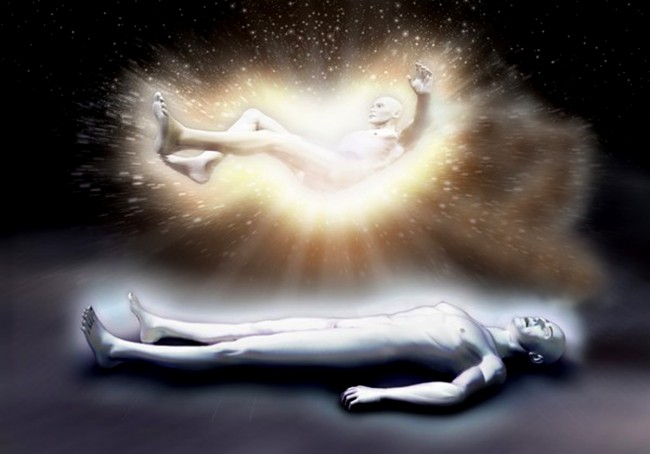
It often ignites a profound spiritual transformation, reshaping how individuals perceive life, death, and the very essence of existence.
Many describe being enveloped in an overwhelming sense of unconditional love and interconnectedness—an experience that transcends religious boundaries and fosters a sense of universal spirituality.

The once-intimidating fear of death dissolves, replaced by a deep peace and renewed purpose, often accompanied by a heightened commitment to compassion, forgiveness, and genuine connections with others.
NDEs frequently lead to a reexamination of priorities, where material pursuits lose their allure, giving way to a focus on spiritual growth and acts of service. Those who have undergone such experiences often emerge with heightened intuition, a clearer understanding of their life’s purpose, and an enduring appreciation for the present moment, fundamentally shifting perspectives on mortality and inspiring a life anchored in love, gratitude, and a deeper spiritual awareness.
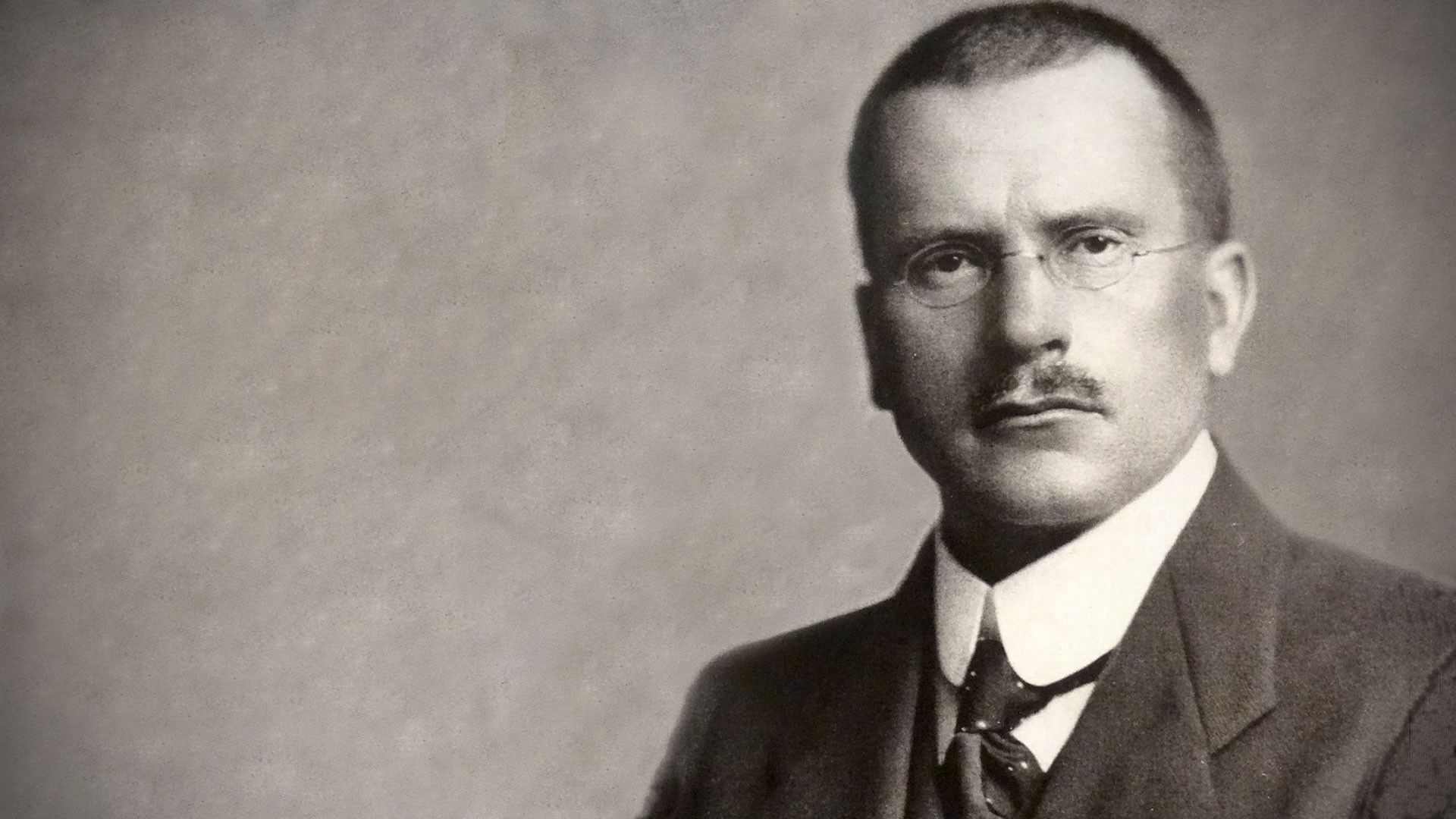
Carl Jung, whom I’ve mentioned before, is another figure that greatly piques my curiosity. Despite being an academic and a prominent figure in the new wave of psychology in the 1930s, he was also a mystic. He believed that everything in life is connected, that spiritual experiences are significant, and that life itself is filled with mystery.

In his autobiography Memories, Dreams, Reflections, he recounts a near-death experience he had, an event that profoundly influenced his perception of reality, existence, and the human condition.
Here is an excerpt from it.
“At the beginning of 1944, I broke my foot, an ordeal soon followed by a heart attack that left me unconscious. During this time, I experienced delirium and vivid visions, likely triggered as I hovered near death while receiving oxygen and injections. The intensity of these visions convinced me I was on the brink of dying. My nurse later recounted that I appeared surrounded by a bright glow—a phenomenon she had sometimes observed in the dying. She said I had reached the "outermost limit."
In this state, I couldn't discern whether I was dreaming or in a state of ecstasy. Strange occurrences unfolded. I felt as though I was suspended high above, seeing the Earth as a luminous globe enveloped in a glorious blue light. Beneath me lay the deep blue sea and the subcontinent of India. My vision spanned the entire Earth, its outlines shimmering in silvery green through the azure glow. To the left, the reddish-yellow expanse of the Arabian desert was visible, while farther in the distance, the Mediterranean appeared faint and foggy. Snow-covered mountains stretched out to the far edges of my sight.
From this height, the Earth appeared as the most beautiful sight I had ever beheld. But my attention was soon drawn to something else—a tremendous, block-like stone structure surrounded by a serene and timeless silence. This edifice featured a small stone bench and a door encircled by a wreath of bright flames. Approaching the structure, I ascended the steps leading to its entrance, and something extraordinary began to occur.
I felt as though everything I had ever thought, desired, or experienced was being stripped away. My earthly existence seemed to fall away, a painful yet cathartic process. Yet something remained—my essence, which carried with it all that I had been, everything I had experienced or done. It was as though my entire life existed as a unified whole, and I felt, with great clarity, this is who I am.
At first, this annihilation felt devastating, like losing everything. But soon, this loss became irrelevant. What remained was complete, unburdened by what had been stripped away. I no longer yearned for the life left behind. My focus shifted toward the temple before me, and I was certain that, upon entering, I would finally understand the broader context of my existence—how my life fit into the grand historical continuum. I would learn what came before me and where my life was leading.
As I approached the illuminated room of the temple, I anticipated meeting the people to whom I truly belonged, those who held answers to my deepest questions. My life, which had often felt like an isolated fragment of a larger story, would finally make sense. I felt that everything I had ever wondered about—why my life had taken its peculiar course and what it meant—would soon be revealed.
However, as I neared this profound realization, a sudden interruption drew my attention. Rising from below, from the direction of Europe, appeared an image of my doctor, Dr. H., framed by a golden chain or laurel wreath. In that moment, I instinctively understood: he was more than a man—he was an avatar of an eternal archetype, a basileus or ruler in his primal form. Although he didn’t speak, a silent exchange occurred between us. He conveyed a message: there was a protest against my departure. I was told I had no right to leave the Earth and must return.
As soon as I heard this, the vision vanished. I was overwhelmed with disappointment. The painstaking process of shedding my earthly identity had been in vain, and I was denied entry to the temple and the reunion with my true companions. For weeks afterward, I struggled to reconcile myself to life again. Food repelled me, and the world outside my sickbed appeared lifeless and artificial, like a painted curtain full of meaningless images.
I felt trapped once more in the "box system" of existence, where each person is confined to their own isolated compartment. This realization filled me with despair. I had been so eager to escape it all, to transcend the confines of earthly life. Now, I was forced to return, to rebuild my understanding of this artificial, three-dimensional world and once again find meaning in it.”

A hug.
M