The War She Didn’t Sign Up For
On being a nurse at the frontlines — and what happens when the system you gave your life to stops making sense.
She described it simply.
I felt like I was at war — a biological war that no one prepares you for.
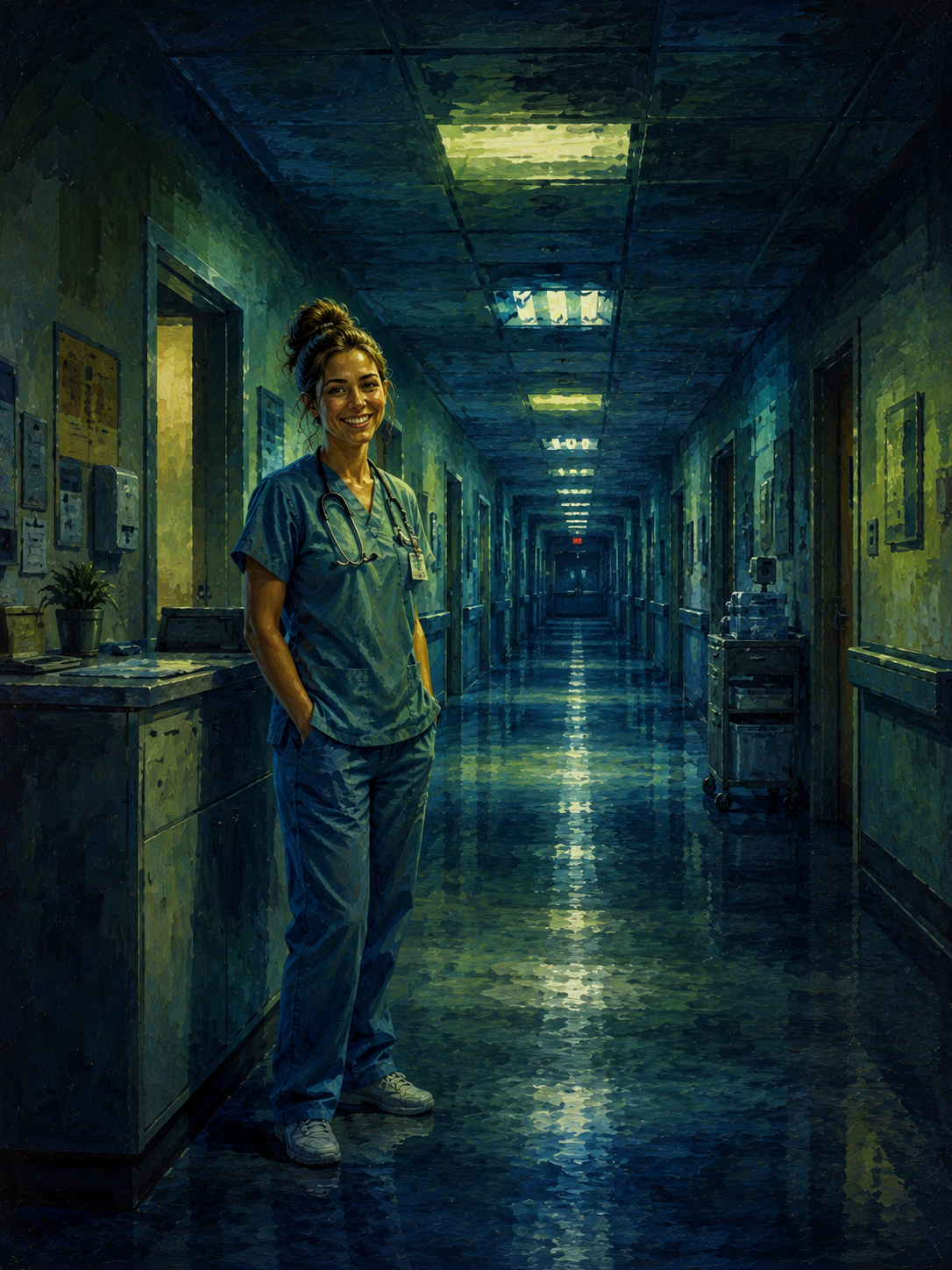
Alexandra was an ICU nurse. She had spent a decade training for exactly this — crisis, pressure, the moment when everything is falling apart and someone needs to hold the room together. She was built for hard. Martial arts. Twelve-hour shifts. The quiet courage of walking into rooms where people are dying and staying present anyway.
And none of it prepared her for COVID.
Not because the medicine was harder. Because the world inside those hospitals had changed in a way that no clinical training accounts for. The patients were still sick. The protocols were still running. But something else had shifted — something in the air between the people who were supposed to be on the same side.
She watched colleagues decide that certain patients didn’t deserve the same care based on their choices. She watched fear — the same fear that had always been present in an ICU, always manageable, always something a good nurse could work around — become something weaponized. Directed. Used to justify things that violated the oath she had taken.
And she held a 92-year-old woman’s hand while that woman died — her family watching on FaceTime, not allowed in the building — and she thought: I cannot imagine the end of my life and not being able to hold my husband’s hand.
In the Hero’s Journey, this is Stage 3: Crossing the Threshold. The moment the hero enters a world where the old rules no longer apply. Where the place they believed in turns out to be something different than what they signed up for.
The threshold, once crossed, cannot be uncrossed.
What the clip doesn’t show — what a 60-second video can only gesture toward — is what it costs to keep your oath when the system around you has abandoned it. Alexandra kept treating every patient the same. Regardless of their choices. Regardless of what her colleagues thought of her for it. She kept showing up as the nurse she had promised to be.
And it hollowed her out.
Not because she did the wrong thing. Because doing the right thing inside a broken system is its own kind of war. One that doesn’t end when the shift does. One that follows you home, sits with you at dinner, wakes you up at 3am with a question that has no clinical answer: why did I give this decade to something that turned into this?
The Ordinary World had ended. She just didn’t know yet what came next.
That part of the story — the collapse, the surrender, the bench in the Florida Keys at 1am — is in the full episode. And it’s worth the hour.
Prefer to listen? Full episode on Spotify — link in bio.