Why You're Not Fully Committed to Your Own Life (And What Sun Tzu Knew About It)
When survival depends entirely on what you do next, you discover capacities you did not know you had.

"You cannot find yourself while you are still keeping one foot outside the door."
All I have is what I have here.
For a long time, I didn't know if that was enough.
No job waiting for me somewhere. No family member I can call to bail me out. No home to go back to. Just this — what I have built, what I am building, and the uncomfortable silence that follows when you realize there is no exit.
That silence, I have come to understand, is not a threat.
It is an invitation.
What Sun Tzu Understood That Most People Never Will
There is a concept in The Art of War that has stayed with me longer than almost anything else I have ever read.
Sun Tzu calls it Death Ground.
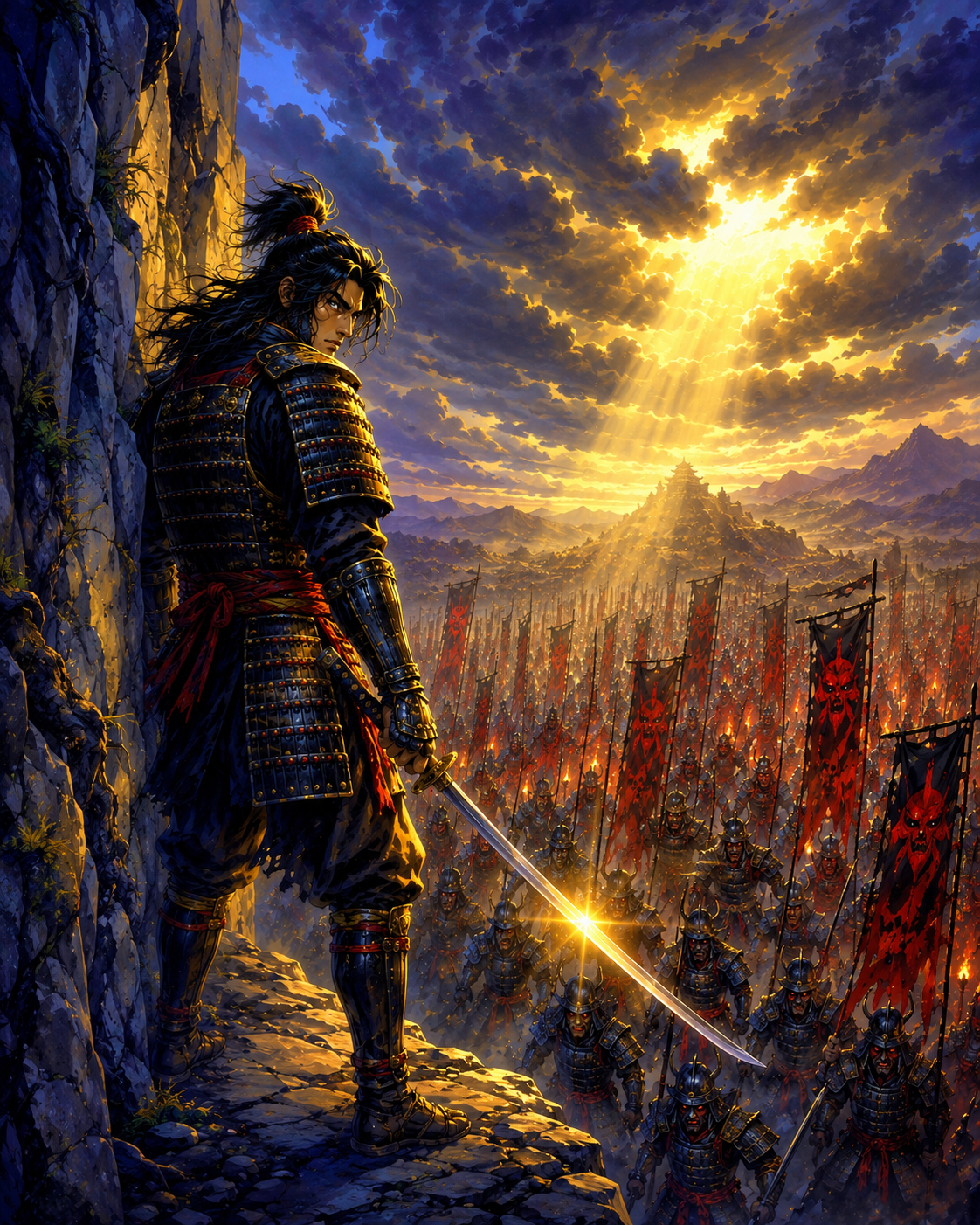
It is the military situation in which an army finds itself with its back against a mountain, surrounded, with no possibility of retreat. No alternative. No escape route. No plan B.
And here is what Sun Tzu observed: soldiers who fight on Death Ground fight differently. Not because they are braver. Not because they are stronger. But because when there is no way back, something shifts at a fundamental level. The mind stops calculating exits and starts calculating only one thing — how to move forward.
When survival depends entirely on what you do next, you discover capacities you did not know you had.
I have seen this. I have lived this. And I have watched other people avoid it their entire lives.
The Exit We Keep in Our Pocket
I met a guy in Australia once. His name was Matteo — same as mine, which made the conversation feel strange, like talking to a version of myself that had made different choices.
He had moved to Australia with energy, ambition, good intentions. But the reality of being an immigrant hit him fast. You start from the bottom. You do the jobs nobody else wants. You build slowly, or you don't build at all.
He was working as a waiter. Not temporarily — indefinitely. And when I asked him why he wasn't looking for something else, he told me the truth without realizing it.
"I have a job waiting for me back home. My father's company. I can always go back."
He left three months later.
I know another person — Brazilian, living in Miami for three years. He works whatever jobs he can find, complains that the economy is impossible, that nothing works, that everything is against him.
And in the same breath, he tells me his brother has a construction company in Brazil. That there is always a place for him there.
He is still in Miami. Still waiting for something to change.
What both of them have in common is not bad luck. It is the exit they keep in their pocket. The quiet knowledge that if things get too difficult, too uncomfortable, too real — there is somewhere else to go.
And that exit, invisible as it is, changes everything.
You Cannot Find Yourself While Keeping One Foot Outside the Door
This is what I want to say directly, because I think it is the thing nobody tells you when they talk about finding yourself.
Most of the advice sounds like this: explore, travel, journal, meditate, try new things, follow your curiosity.
And none of that is wrong.
But there is something that searching alone cannot give you. Something that only comes when the mountain is at your back.
You cannot find yourself while you are still leaving yourself an exit.
Because the exit is not just a practical option. It is a psychological one. As long as it exists — even in the back of your mind, even as a vague possibility — part of you is already halfway out the door. Part of your energy, your focus, your commitment is quietly allocated to the escape route rather than to the life in front of you.
You are never fully in.
And you cannot find what you are made of when you are never fully in.
Joseph Campbell Called It Facing the Dragon
Campbell wrote about this moment in a different language, but he was describing the same thing.
In the Hero's Journey, there comes a point where the hero must face the dragon. Not negotiate with it. Not find a way around it. Not wait for someone else to slay it first.
Face it.
The dragon is not always a monster. Most of the time it is internal — our fears, our limitations, our insecurities, the stories we have told ourselves for so long that we have stopped questioning them.
And here is the part that most people miss: the hero does not face the dragon because he is ready. He faces it because there is nothing left to do but face it.
Death Ground and the dragon are the same moment described by two different civilizations two thousand years apart.
The back against the mountain. The dragon in front. No exit.
That is where you find out who you are.
What I Have Learned From Having No Exit
I did not choose my Death Ground. It chose me.
I have lived on three continents. I have built things and lost things. I have started over more than once in places where nobody knew my name and nobody owed me anything.
And I have learned that the moments that defined me — the ones that actually changed something permanent inside me — were never the moments when I had options. They were the moments when I didn't.
When the only direction available was forward.
When the question stopped being "what if this doesn't work?" and became "this has to work."
The quality of that commitment is different. The intensity is different. The version of yourself that shows up on Death Ground is a version you have never met before.
And you cannot meet that version while keeping the exit in your pocket.
The Lesson
I am not telling you to burn your life down.
I am telling you to look honestly at the exits you are keeping — the job you could always go back to, the city you could always return to, the version of yourself you could always retreat into — and ask yourself what they are costing you.
Not in practical terms.
In commitment terms.
Because you will never give everything to a life you are only half inside.
Sun Tzu knew this. Campbell knew this. And somewhere, underneath all the searching and the exploring and the journaling, you probably know it too.
The dragon is waiting.
The mountain is behind you.
The only question is when you decide to stop looking for the exit.
By just being here — with your fears, your questions, your path — you are already a hero.
Download the Free Hero's Journey Field Guide here
#beyourownhero
M